Journaling
Journaling is a written record kept on a regular basis, in whatever format holds up over time. It needs nothing but paper and a pen, which is also why it's the easiest of the five to abandon.
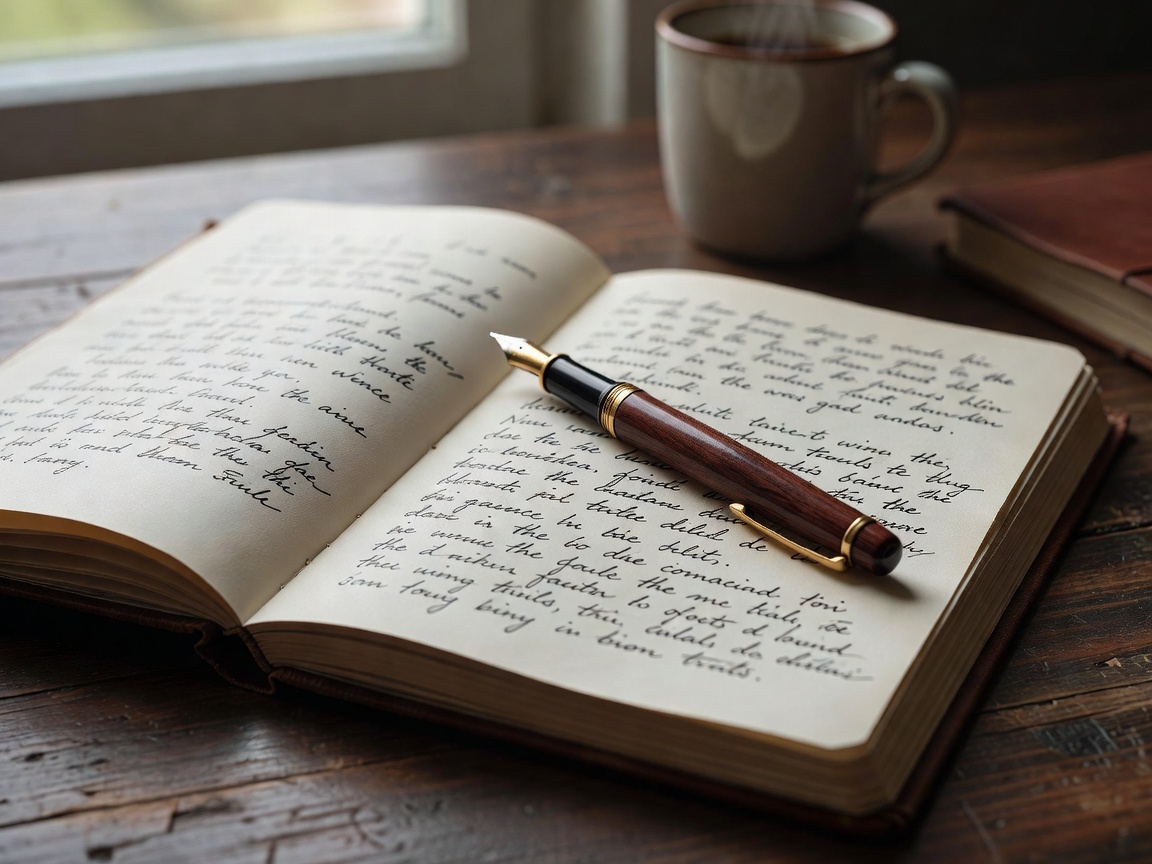
Formats that have stuck
- Bullet journal
- Devised by Ryder Carroll: rapid logging with a short symbol key, a running index, and monthly migration of unfinished items.
- Morning Pages
- Described by Julia Cameron in The Artist's Way: three handwritten pages, unedited, done first thing, written for no audience.
- Five-year journal
- The same page revisited on the same date across five years; a few lines only, building a compressed view of change over time.
- Gratitude log
- A short recurring list with no narrative required, usually the fastest of the formats to sustain.
What actually separates them
The formats differ less in materials than in structure. A bullet journal imposes a system — symbols, an index, a migration ritual — that gives an uncertain writer somewhere to start. Morning Pages deliberately removes structure, on the reasoning that unfiltered writing gets past a person's own self-editing faster than a structured prompt does. A five-year journal is written for a future reader as much as a present one; the small daily entry only becomes interesting once several years of the same date sit side by side. A gratitude log asks the least of the five in time — often under a minute — which is exactly why it's the format most likely to survive a busy week.
Paper, pen, and decisions that matter less than they seem to
Dot grid paper supports both handwriting and simple layout — tables, trackers, small sketches — without the ruled lines of standard notebook paper getting in the way. A fountain pen changes how writing feels on the page more than it changes what gets written; a ballpoint does the job with no maintenance. The larger decision is between a fixed notebook and a refillable system with loose pages: a refillable system lets pages be reordered or removed, while a bound notebook keeps a fixed sequence, which matters if the record's date order is the point of keeping it at all.
Choosing a format
Pick based on what would actually get written at the end of a long day, not what a format promises in principle. A system that gets abandoned in the second week is worse than a plain notebook kept consistently for a year, because an abandoned system usually stops the habit entirely rather than just simplifying it. Structure helps a writer who doesn't know where to start; freedom helps a writer who finds structure gets in the way of what they actually want to say.
Getting started
Keep the first month low-structure regardless of which format is chosen eventually. Write the date and a single line if that's genuinely all there is some days — a short entry kept consistently beats an ambitious one abandoned after three tries. Re-read after a month rather than after a single entry; one day's writing never shows whether a format actually fits, but a month of entries usually does.