Knitting
Knitting turns a continuous strand of yarn into fabric using two needles and a repeating set of loops. It is one of the oldest textile techniques still practised largely unchanged.
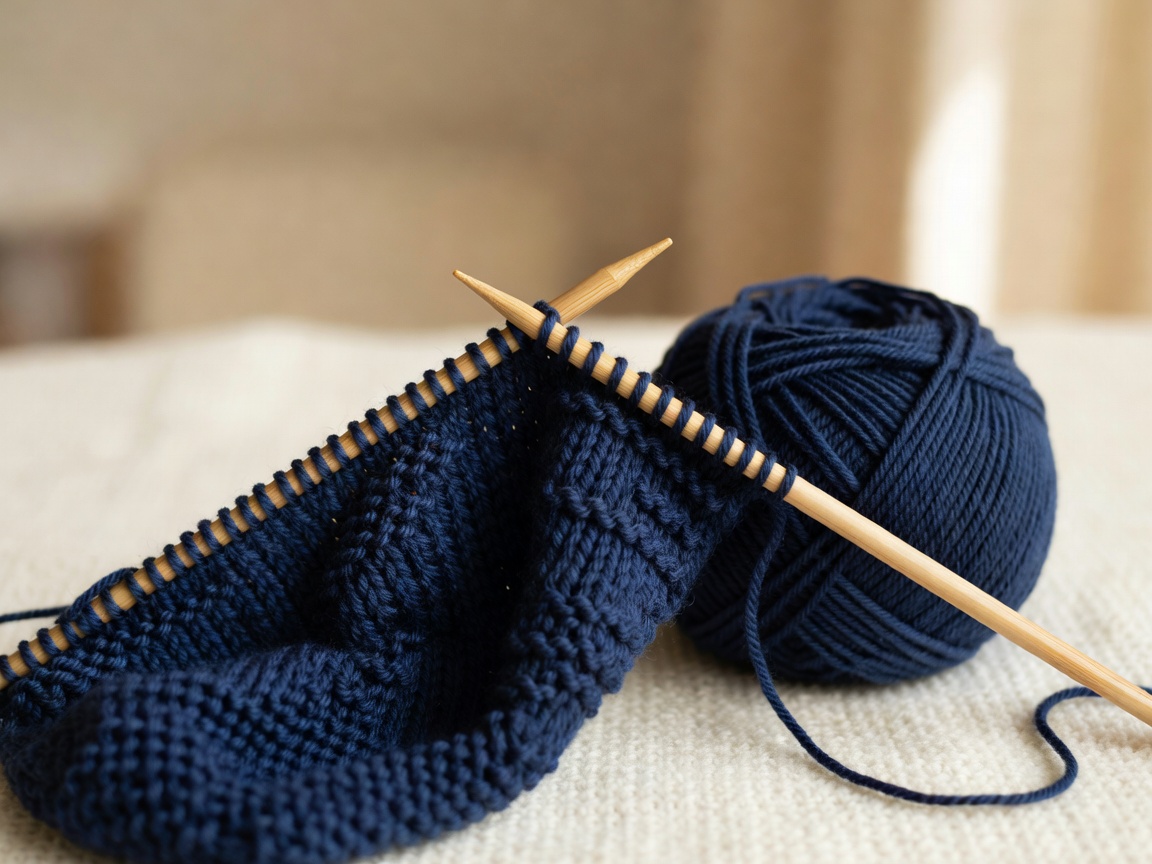
Two stitches, most fabric
Almost everything in knitting is built from two moves: the knit stitch and the purl stitch. Stockinette fabric — smooth on one face, bumped on the other — is knit stitches worked on every right-side row. Garter fabric, with its ridged texture on both faces, is knit stitches worked on every row regardless of side. Ribbing alternates knit and purl stitches within the same row to produce the stretchy vertical columns used at cuffs and hems. Nearly every pattern, however complex it looks, reduces to some sequence of these two stitches plus increases and decreases that add or remove stitches from a row.
Yarn weight and needle size
Yarn is categorised by weight — the thickness of the strand, not its mass — on a scale set out by the Craft Yarn Council that runs from lace and fingering through sport and DK (double knitting) to worsted, bulky and super bulky. A pattern written for one weight won't behave the same in another without recalculating stitch counts, because thicker yarn covers more distance per stitch.
Needle sizing causes more confusion than it should, because three systems run in parallel. Metric states the needle's diameter directly in millimetres. US sizing runs a numbered scale that increases with diameter. UK sizing runs a numbered scale that decreases with diameter, which is the reverse of the US system and the most common source of a wrongly bought needle.
| Metric (mm) | US | UK |
|---|---|---|
| 2.0 | 0 | 14 |
| 2.5 | 1/2 | 13 |
| 3.0 | 2/3 | 11 |
| 3.5 | 4 | 9 |
| 4.0 | 6 | 8 |
| 5.0 | 8 | 6 |
| 6.0 | 10 | 4 |
| 8.0 | 11 | 0 |
Techniques that diverge
Continental and English knitting describe which hand holds the working yarn — left for continental, right for English — and produce identical fabric at different speeds and different learning curves; neither is more correct, and most knitters settle on whichever they learned first. Fair Isle stranded colourwork carries two yarn colours across a row, floating the unused colour behind the work, and produces patterns limited to a handful of colours per row by convention rather than rule. Intarsia works blocks of colour with separate yarn bobbins for each block rather than stranding across the whole row, which suits large picture motifs but leaves no floats to manage. Patterns for both, along with nearly everything else knitted today, are catalogued on Ravelry, the pattern database most knitters use to find and organise projects.
Choosing yarn and needles
Fibre content changes how a finished piece behaves more than colour or price does. Wool holds its shape, insulates when damp, and forgives an uneven tension better than most fibres. Cotton has almost no stretch, which makes it a poor first choice for anything fitted. Acrylic is inexpensive and machine-washable but doesn't breathe the way wool does. Needle material affects feel rather than result: bamboo and wood grip yarn slightly, which helps a first-time knitter keep stitches from sliding off; metal needles slide fast, which experienced knitters often prefer for speed.
Starting a first project
Cast on around twenty stitches in a smooth, light-coloured yarn — dark yarn hides the stitch structure and makes early mistakes harder to see. Knit every row until the swatch measures a hand's width; garter stitch alone teaches tension control without the added complexity of purling. Learn to read gauge before choosing a first real pattern, since a scarf pattern tolerates a loose or tight tension in a way a fitted garment never will. A scarf hides mistakes. A jumper does not.